

Cooking in a Dutch Oven Over Fire in a Woodee Fire Pit
There’s something timeless and comforting about cooking outdoors with a Dutch oven over fire. It’s one of those pieces of kit that connects us to centuries of tradition, yet it still feels perfectly at home in a Woodee fire pit in the garden. If you’ve never cooked in a Dutch oven before, here’s my guide to what they are, how to use them, and why I think they’re a really versatile way to cook outdoors.
What is a Dutch oven?
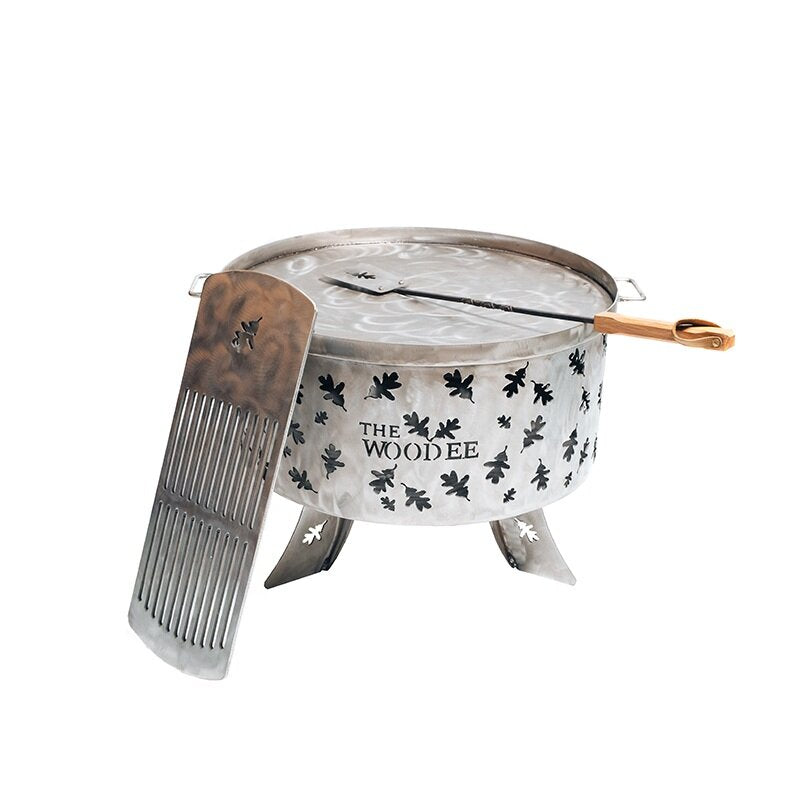
A Dutch oven is a heavy cast-iron pot with a tight-fitting lid, designed to cook over fire or hot coals. They come in a variety of sizes, usually measured in quarts (one quart is roughly equal to a litre). A 6-quart Dutch oven, for example, is about the right size for a family meal and fits perfectly in our 600mm Woodee.
Traditionally, they’re made from cast iron, which holds and distributes heat beautifully. Some are smooth-based, while others have three sturdy little legs (my personal preference), which help lift the pot slightly above the base heat and make it much more stable in the fire. I also like lids with feet or stabilisers – they mean you can flip the lid over and use it as a second pan or a flat griddle for frying.

A little history and tradition
Dutch ovens have been around for hundreds of years. They were carried by pioneers, explorers, and armies, because one pot could do it all – boil, bake, roast, and stew. Whole communities gathered around the fire to eat from them, which makes it no surprise that they’re still a wonderfully sociable way of cooking today.
Where to buy a Dutch oven
We bought ours from our local army surplus shop, but you can also find them in camping and outdoor shops or online. Look for solid cast-iron with a well-fitting lid, and decide whether you prefer a smooth base or one with legs. Either way, it’s an investment that will last a lifetime if you look after it.
Preparing your Dutch oven
Before you cook with a Dutch oven, it should always be seasoned or oiled. This protects the cast iron from rust and creates a natural non-stick surface. The key is to avoid soaking it in soapy water after use – simply scrape out food residue, wipe it clean, and give it a thin coat of oil before putting it away. It will improve with age the more you use it.
Fuel: kiln-dried wood vs local charcoal
For cooking in a Woodee fire pit, I like to use kiln-dried hardwood logs (we get ours from CertainlyWood) or good quality local charcoal (we get ours from Birchwood Forestry). Kiln-dried wood burns hot and clean, giving you a good bed of embers. Charcoal gives longer, more even heat – ideal if you want to maintain steady cooking temperatures. Wood adds atmosphere with crackle and flame, while charcoal is quieter and more predictable. Often, I’ll use a mix of the two: I always start my fire with wood then add charcoal when the fire is established.
Positioning the Dutch oven in a Woodee fire pit
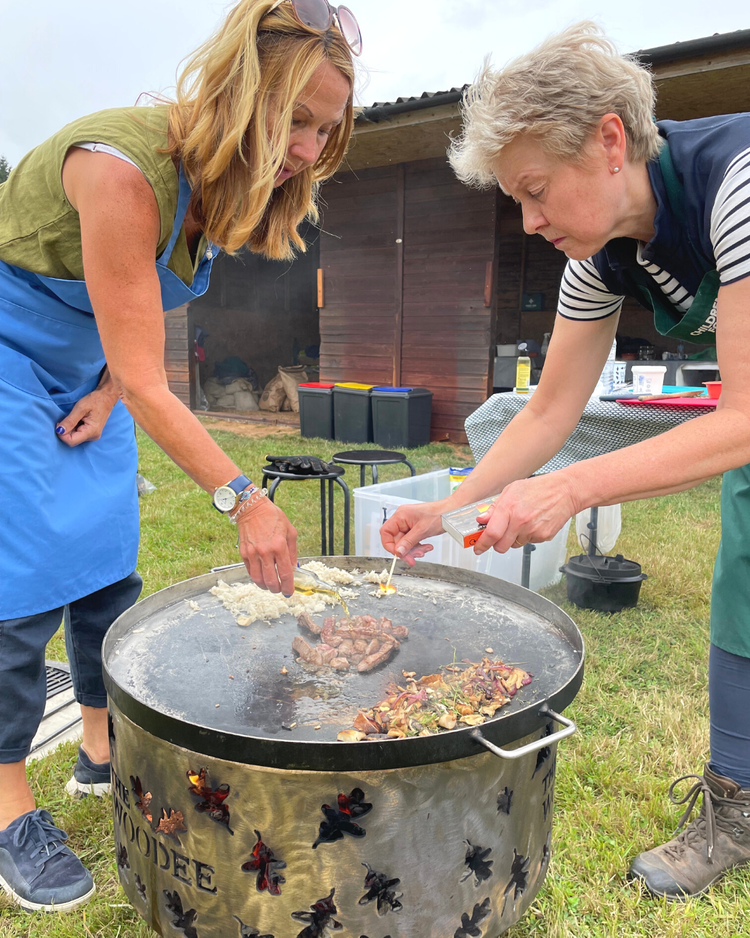
One of the joys of cooking in a Woodee is learning how to use the fire. Sometimes you’ll want the Dutch oven directly on the glowing embers; other times it’s best to move the embers aside and sit the oven on the metal base of the pit. Both give different types of heat. You can also pile hot coals on top of the lid for a true all-round bake – perfect for bread, rolls, or hot cross buns.
Some people also hang their Dutch oven by its handle on a tripod over the fire. It’s a more traditional method that allows the pot to sit above the flames and simmer more gently. We don’t tend to cook this way ourselves, but it’s another option worth knowing about.
Types of heat
A Dutch oven responds to different heat sources:
- Direct heat from underneath when sitting on embers or the fire pit base
- Convection heat circulating inside the pot itself
- Radiant heat from above when hot coals are placed on the lid
Learning to balance these is part of the art of outdoor cooking.
Cooking different foods in a Dutch oven
A Dutch oven really is a “do-it-all” pot. If I am cooking something based in a liquid like stew, chilli or bolognaise I put it directly in the base of the oven. However I often use a simple wire cake stand inside the oven to raise food up off the base. This stops things like roast chicken or whole game birds from sitting directly on the hot metal, and it allows the heat to circulate for more even cooking. It works brilliantly for cakes and bread too, helping them bake through without scorching the bottom.
Handling and safety
Always use proper fire gloves to lift or move the Dutch oven – it gets incredibly hot. When you need to add ingredients, you can either lift the pot out of the fire or add them while it’s still sitting on the embers. Lifting it out gives you more control (and less ash in the food), but sometimes it’s easier to drop in vegetables or spices as it simmers.
Cooking with the lid on vs off
Lid on is best for baking, stewing, and roasting – it traps in moisture and heat. Lid off is great for frying, browning, or when you want the flavours to reduce and concentrate.
What to cook in a Dutch oven
Honestly – almost anything! But here are some of our favourites from the Woodee kitchen, all tried and tested outdoors:
· Fool-Proof Slow Cooked Beef Casserole
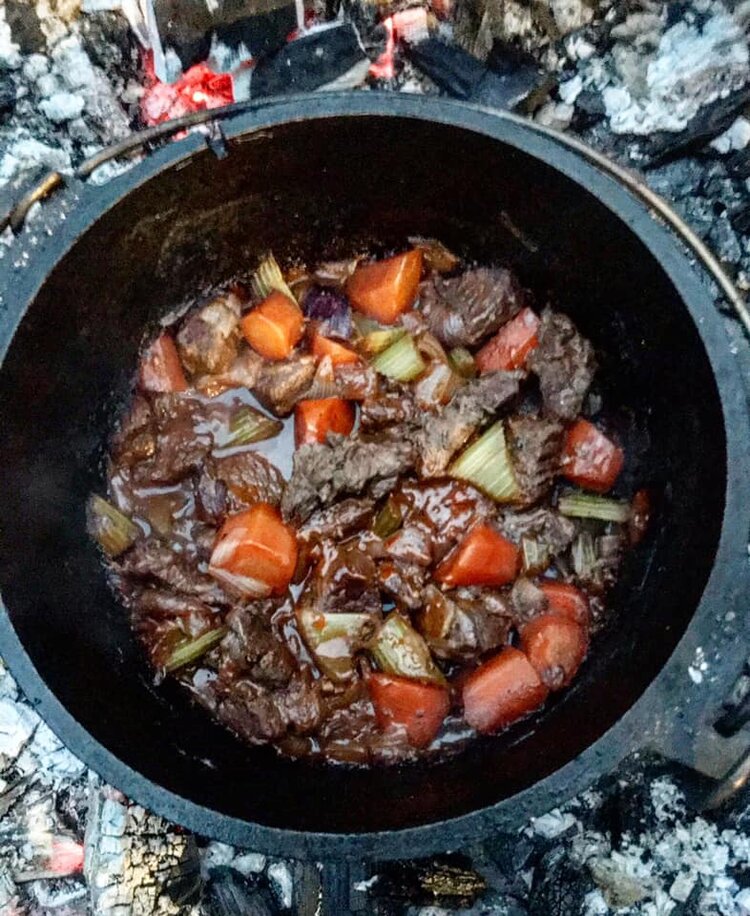
Rich, tender, and deeply comforting. Brown the beef directly on the fire pit base, add vegetables, stock, and a splash of wine, then let it slowly cook until the meat melts in your mouth.
· Wild West Hot Pot
Smoky, hearty, and just a little bit different. Sausages, beans, coffee, Worcestershire sauce, and even a square of dark chocolate go into this one. It’s bold and rich, and perfect with fresh bread.
· Forest Pheasant
For something a little special. The pheasant is browned with lardons, leeks, and mushrooms, then flamed with cider brandy and simmered with cider and stock. Game at its rustic best.
· Woodee Rice Pudding
Proof that Dutch ovens aren’t just for savoury food. Mix rice, milk, sugar, and nutmeg, then nestle the pots among the embers for a creamy pudding with a hint of smoke. Comfort in a bowl.
· Gooseberry and Chamomile Cake
A moist, gently tart dessert that balances sharp gooseberries with fragrant chamomile. Baked over embers using a trivet for even heat.
· Sticky Toffee Pudding
A gooey, date-sweetened treat made even better by cooking it in a Dutch oven, topped with warmed caramel sauce.

And don’t forget breads – Dutch ovens are wonderful for baking soda bread, rustic rolls, and even hot cross buns, as the all-round heat creates a perfect crust.
The sociable side of Dutch oven cooking
Cooking in a Dutch oven is slow, shared, and deeply social. Everyone can sit around the fire, watch the food bubble away, and even take turns tending the pot. And here’s a tip – the food keeps cooking inside the Dutch oven even after you’ve taken it off the fire, because the cast iron holds so much heat. That’s why it’s best to let it rest before serving, and why timing can be a little unpredictable.
The art of outdoor cooking
One of the reasons I love Dutch oven cooking is that no two sessions are ever the same. Wind, weather, temperature, and fuel all change how quickly food cooks, because they change how fast and hot the fire burns. It’s not an exact science – it’s an art, and part of the fun is learning and experimenting.
Before you do any cooking, you need a good fire. I recommend using the top-down method to light your fire, which we’ve written about in detail here. In short, you stack your largest logs at the bottom, then medium pieces, and finish with kindling and firelighters on the top. As the fire burns down through the layers, it creates a steady, long-lasting heat and a wonderful bed of embers.
From lighting your fire, allow around 40 minutes on average before you’ll have a good cooking base ready for your Dutch oven. You’re looking for glowing embers rather than high flames – that’s when your Woodee becomes the perfect outdoor kitchen.
Want to learn more?
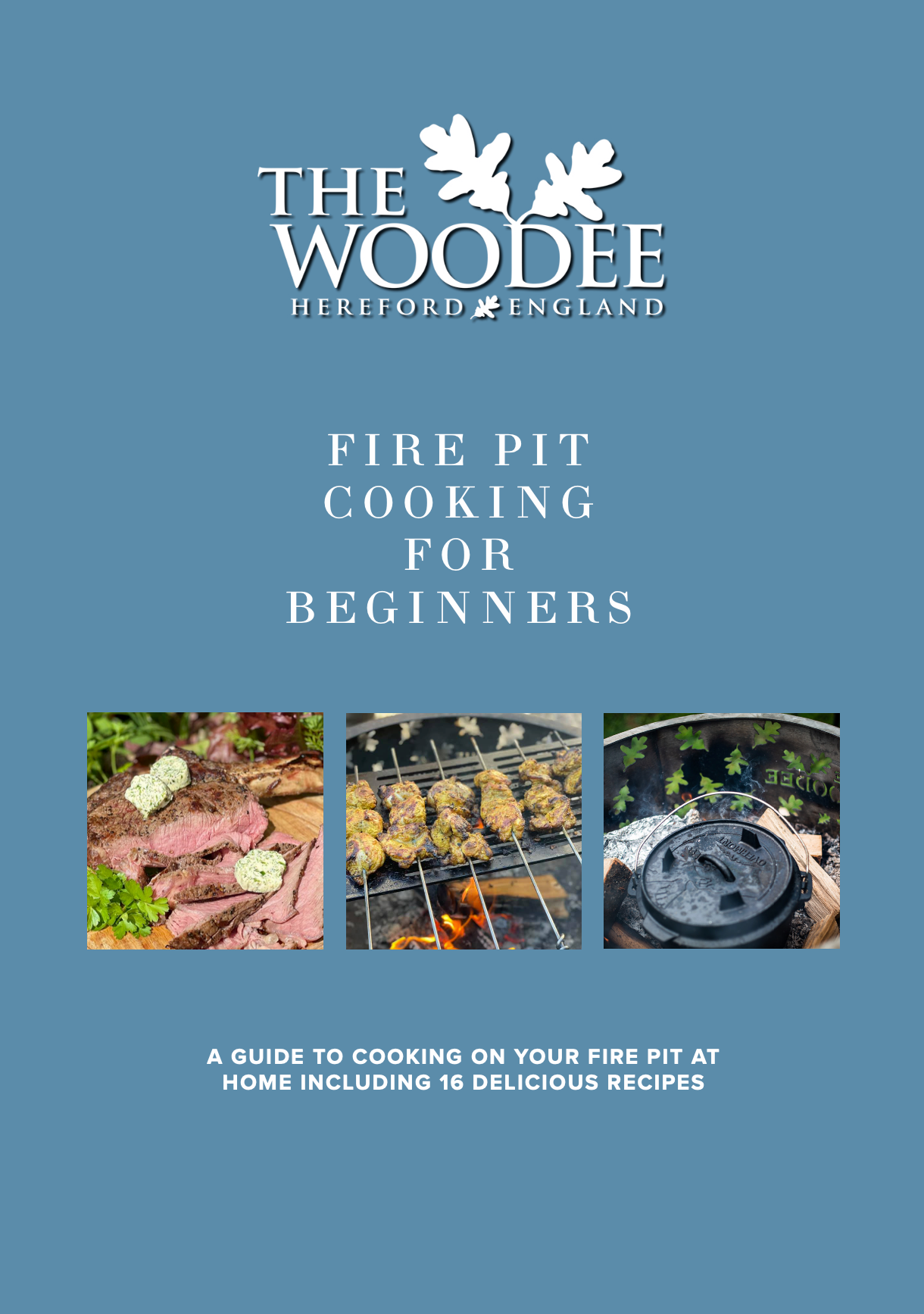
If you’re new to fire pit cooking, take a look at our Fire Pit Cooking Guide for Beginners, which you can download from our website. And if you don’t yet own a fire pit, our 600mm Woodee fire pit is our best-seller and perfect for cooking with a Dutch oven.

Leave a comment